By Katrina Tomacchio // @thenortheastginger
Wellness has gotten loud.
Everyone is optimizing something, tracking something, selling something. They’re promoting stacking aspirational habits, filling our homes with endless gadgets and turning wellness into big business in the name of what’s trendy.
But as I move deeper into my thirties — as a mother, a non-drinker and someone who’s lived on both sides of “doing too much” — I’m far less interested in chasing trends and far more interested in supporting practices that actually hold you. I don’t really concern myself with what looks impressive online; I want what subtly improves daily life, and that’s not necessarily the newest, hottest, trendiest thing all over social media.
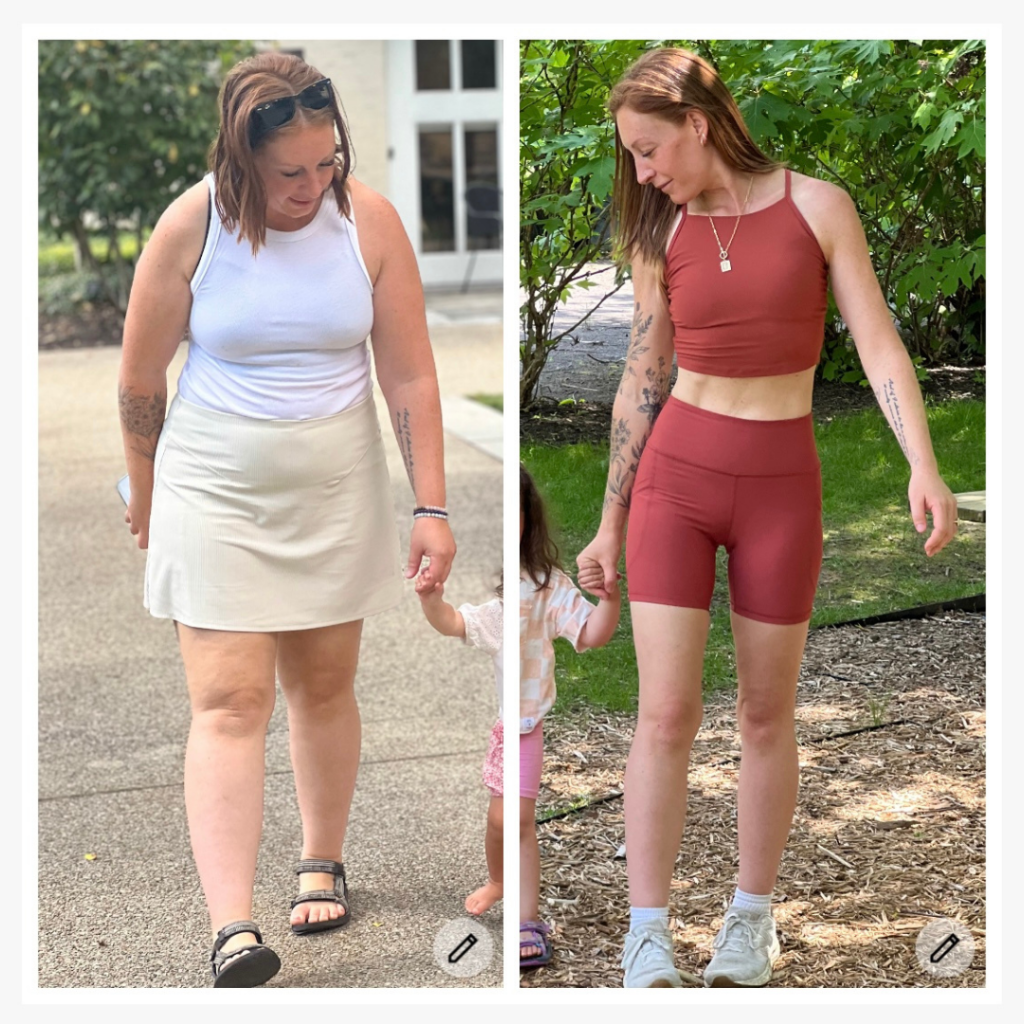
Here are the wellness trends I’m genuinely supporting in 2026, as someone who recently lost more than 90 pounds. Not because they’re new, but because they’re sustainable, beneficial and I’ve seen real change because of them.
Sauna
Sauna use isn’t a novelty, it’s ancient. And in a culture addicted to stimulation, heat offers something rare: enforced stillness.
Regular sauna use has been linked to cardiovascular health, improved circulation, stress reduction and even longevity. And heat exposure activates heat shock proteins and encourages parasympathetic nervous system activity. In layman’s terms? Heat kickstarts a relaxation response, inducing a decrease in cortisol and adrenaline levels, giving our bodies an opportunity to rest. And regular use (4-7 times a week) has been shown to provide significant benefits.
For me, sauna is about slowing down, sweating deeply and letting the body do what it already knows how to do. I love the quiet, the stillness and the opportunity to unplug from the word around me.
At our house, we rely on a portable full spectrum infrared sauna (truly one of the best investments we’ve ever made in our health). This specific sauna is ideal for us because it folds up and can be stored in a closet or under the bed, is very user friendly/easy to set up and it’s a much more affordable option compared to most at-home saunas.
While a traditional sauna heats the air, infrared saunas use infrared light to heat your body, providing similar benefits at a lower temperature. It’s a convenient way to include sauna into your daily life, without ever leaving the house.
But don’t get me wrong, I do still love a traditional sauna experience and will indulge whenever I’m able. Thankfully, there’s myriad options in Pittsburgh like Mindfuel in The Strip and Bad Sauna in the East End. There’s even a Pittsburgh Sauna Society, dedicated to promoting authentic sauna in the area.
Somatic & Nervous-System–Led Workouts
I really hate the notion that workouts should be painful or grueling. Your body doesn’t thrive in a state of punishment, nor does it deserve that kind of treatment.
Somatic movement, walking, Pilates, and yoga all prioritize mind-body connection, and research shows that nervous-system–regulated movement like this can greatly reduce cortisol. What’s more is that doctors at Stanford suggest that regular moderate workouts, like a daily 30-minute walk, outperform occasional intense sessions.
As far as I’m concerned, movement should leave you feeling more present, not depleted. On my weight loss journey from 2023 to 2025, I successfully lost more than 90 pounds, and my main workout was walking 10-20k steps a day, so I speak from experience when I say that gentle, light movement can absolutely make a major difference in your health. I’ve maintained my weight by continuing this practice, along with eating whole, real foods and minding my mental health.
I make it a habit to engage in regular somatic movement, which truly makes all the difference in my anxiety and mood. My favorite programs can be found here, and they’re great for beginners and easy to do in the comfort of your own home.
Intentional Screen Reduction
Have you ever woken up exhausted despite getting a full night’s sleep? Or spent an entire day in a dissociated fog regardless of how much caffeine you consume? Screens could be the culprit.
When we spend hours scrolling short-form content on social media, or binging the latest shows, what we’re actually doing is self-medicating with stimulation. It feels like “rest” but in actuality, it’s a process called neurochemical borrowing. Researchers studying addiction and reward pathways describe how after intense repeated stimulation, the brain becomes less responsive. The brain gets overloaded with dopamine spikes and novelty, but that doesn’t come free; you’re essentially borrowing from tomorrow. The next day, the bill comes due as brain fog, flat mood, low motivation, feeling tired but wired, dissociation and numbness.
Emerging research continues to link excessive screen time to disrupted sleep, increased anxiety and impaired focus, as well as increasing dependence on external validation. Furthermore, blue light exposure in the evening negatively affects circadian rhythm, while constant notifications and checking your phone keep the nervous system in a low-grade stress response.
In 2026, reducing screen time isn’t about restriction for me, it’s about reclaiming presence. Last year, I made it a habit to avoid bringing my phone into the bedroom at night (yes, I’m officially in my digital-alarm-clock era), I don’t check it for several hours after I wake up and I deactivated notifications for all my social media accounts and apps. When I pick up my phone now in 2026, it’s purposeful and intentional, not simply a way to pass the time. And that has made a huge difference.
Sunlight & Circadian Rhythm Support
This one feels almost too simple, but I can attest to the fact that it really works.
Research has shown that sunlight exposure helps regulate circadian rhythm, improves sleep quality and supports hormone balance. And without adequate exposure to sunlight, our mood suffers immensely—research has shown that just a one-hour walk outdoors each morning can yield a 50 percent improvement in depression symptoms over the course of one week.
I make it a priority to spend at least an hour outside each day in winter, and more as the weather improves (looking for a fun challenge? We follow the 1,000 Hours Outside philosophy and it’s a neat way to track your time spent outside with the goal of hitting 1,000 hours in 365 days). As a family, we like to spend time outdoors in the mornings, and I’ve noticed that if we skip a day, or delay until late afternoon, my mood is deeply affected.
One thing I’m strongly considering for 2026 is adding an affordable phototherapy lamp to my morning routine, as it’s been suggested that getting sunlight within 30 to 60 minutes of waking is most effective, and these lamps have been proven to make a positive impact on mood.
Simple, Repetitive Nutrition
We’ve been sold the idea that health requires constant novelty. There’s always a new supplement to add, a new company pushing new products and endless flavors of protein powders to try (do I really want a breakfast smoothie that tastes like Cosmic Brownies? Actually…I’m not going to answer that.)
In reality, simplicity is incredibly regulating, especially when you’re trying to heal from burnout.
I’ve found that protein-forward meals, familiar foods and eating the same nourishing staples on repeat reduces decision fatigue and lowers the likelihood of eating off plan. Indeed, research shows that consistency beats perfection when it comes to metabolic health and weight management.
My diet focuses on whole, real foods, as close to their natural state as possible. I read labels and understand ingredients, and I’ve learned how different macronutrients depend on each other to deliver steady, stable energy.
This article lays out a really simple approach to understanding why the “all-or-nothing” mentality is actually a trap when it comes to diet and fitness, and how consistency and repetition can lead to success.
Low-Stimulation Self-Care
While a weekly spa day certainly sounds nice, I’ve learned that self-care doesn’t need to be elaborate or indulgent to actually be effective. Simple, low-cost opportunities for self-care exist all around us and are a really important way to tend to your mental health:
Walks outside in nature.
Sitting in sunlight for 10-30 minutes.
Listening to the birds chirp—no, not joking. Studies have shown that birdsong reduces anxiety and stress.
Epsom-salt baths with the lights off.
Journaling.
Siting in silence.
Listening to classical music—also not a joke. Studies have shown this greatly reduces stress.
Resting comfortably with a weighted blanket.
I’ve shared previously on social media that my massive weight gain of 100 pounds was due to a severe depression I entered during the COVID years. This eventually led to Binge Eating Disorder, as I attempted to soothe my mental health with the comfort of food, and ultimately developed an addiction to it. So picking up practices that actually soothe my nervous system, instead of providing temporary stimulation disguised as relief, has been imperative.
It’s been shown that practices that reduce sensory input help regulate the nervous system and improve emotional resilience. In a world that’s constantly “on,” low stimulation is deeply restorative and that’s what I’m choosing more of in 2026.
Learning How Change Actually Works
This is a quieter movement, but one I believe will matter most long-term.
Instead of relying on motivation or willpower, more people are studying behavior change, values-based decision making and sustainable growth frameworks. Understanding how people change builds compassion, not only for yourself, but for those around you as well.
This is the direction I’m moving in: fewer hacks, more understanding. For me, I have a deep desire to help others as I’ve helped myself, using a combination of personal stories and informed psychology. My debut self-help book, Going in Dry: A Raw & Ridiculous Guide to Facing Life With Less Alcohol (While Trying Not to Scream) is a great example of this model, and one that I’m excited to explore more of in 2026.
I am thrilled to announce that I’ve been accepted to a 6-month program towards certification as a professional life coach! This certification will help me dive deeper into the psychology behind behavior change and provide me with meaningful tools to continue my work in the self-help genre of writing. And I can’t wait to share that experience with you!
Final thoughts
For me, 2026 isn’t about chasing trends. It’s about practices I’m choosing to support slowly, intentionally and with great respect for the season of life I’m in. I’m here for less noise, more presence and healthy habits that actually hold. Are you in?
________
Hey kids! Just a heads up that this post may contain affiliate links to products I love and use. If you take action after clicking one of these links (i.e. subscribe, make a purchase, etc.) I’ll earn a bit of a commission, which helps me keep this blog up and running – so you can keep finding dope recipes and helpful information! Thanks in advance for supporting The Northeast Ginger – xoxo Gossip Girl

 the northeast ginger
Leave a comment